Start with the reader’s sequence of questions
A series works best when its articles help readers make progress, rather than divide a broad subject into arbitrary slices. Before choosing titles, write down the questions someone might ask as they learn or complete a task. For a series about improving website content, those questions might move from identifying an audience to choosing topics, drafting pages, and reviewing published work. The sequence does not have to be rigid, but it should reveal why each article deserves to exist.
Group closely related questions before you assign them to pages. If two proposed articles would answer the same question for the same reader at the same stage, they may be better as one article. If one question needs a substantially different explanation or action, it may warrant its own page. This approach keeps the plan grounded in usefulness rather than in a target number of posts.
Give every article a distinct job
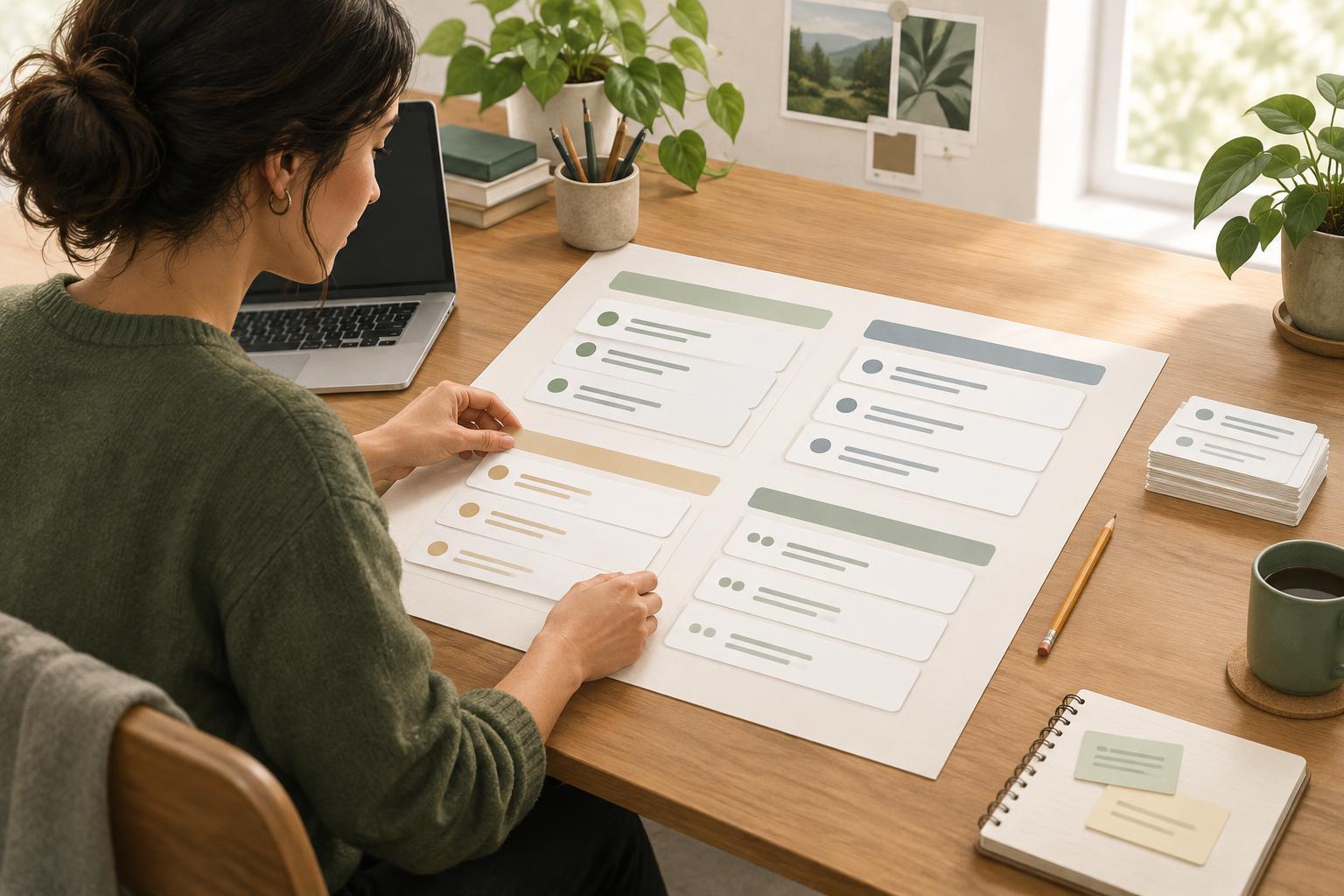
Create a simple series map with one row per proposed article. Record its working title, intended reader, central question, promised outcome, and what it will deliberately leave to another page. The last field is especially valuable: it prevents every introduction from growing into a full explanation of the entire subject. A planning article, for example, can explain how to choose topics without also providing a complete guide to writing headlines.
Choose the main job of each page. One article might introduce a concept, another might guide a decision, and a third might walk through a process. Different jobs can make related pages complementary even when they share vocabulary. Be careful, though, not to invent minor distinctions that readers would not recognize. If you struggle to explain the difference between two articles in one sentence, reconsider the split.
Write briefs that set boundaries before drafting
An article brief does not need to be elaborate. Give the writer a one-sentence purpose, the reader’s likely starting point, three or four points the article must cover, and a short list of topics to mention only briefly. Add the practical question the reader should be able to answer by the end. These choices make it easier to spot repetition while changing the draft is still simple.
For each planned section, ask what new work it does. An example, checklist, or explanation should help the reader take the next step, not merely restate a principle used elsewhere in the series. If several briefs rely on the same example, vary the situation where useful so readers can see how the principle applies in different circumstances. Consistency matters, but identical demonstrations can make distinct articles feel interchangeable.
Use overlap to orient readers, then link onward
Some repetition is helpful because readers may enter a series on any page. Include enough context for an article to stand on its own: define an essential term or give a brief reminder of a prerequisite. Then move to the page’s unique task. When a related topic needs more detail, use a descriptive internal link rather than reproducing several paragraphs of advice.
Links should clarify the relationship between pages. An article about drafting a content brief might point back to a guide on selecting article topics, then point forward to a guide on reviewing a draft. Explain why the linked page is useful at that moment; a bare list of other articles gives readers less direction. Keep the central answer on the current page, however, so readers do not have to follow links just to understand its main point.
Review the series as a whole
Before publication, scan the articles side by side. Compare their introductions, headings, examples, and conclusions. Highlight passages that give essentially the same instruction. Decide whether each instance provides necessary context, belongs on one primary page, or can be replaced by a short summary and a link. This review can also reveal gaps: a step repeatedly mentioned but never explained may deserve a dedicated article.
Revisit the map when you add or update pages. A new article may make an older section redundant, while a revised page may become the best place for an explanation previously scattered across the series. Assign each substantial topic a primary home and adjust links to match. The aim is not to remove every shared idea. It is to make each article useful on its own while giving readers a clear reason to continue to the next one.