Search volume is only the starting point
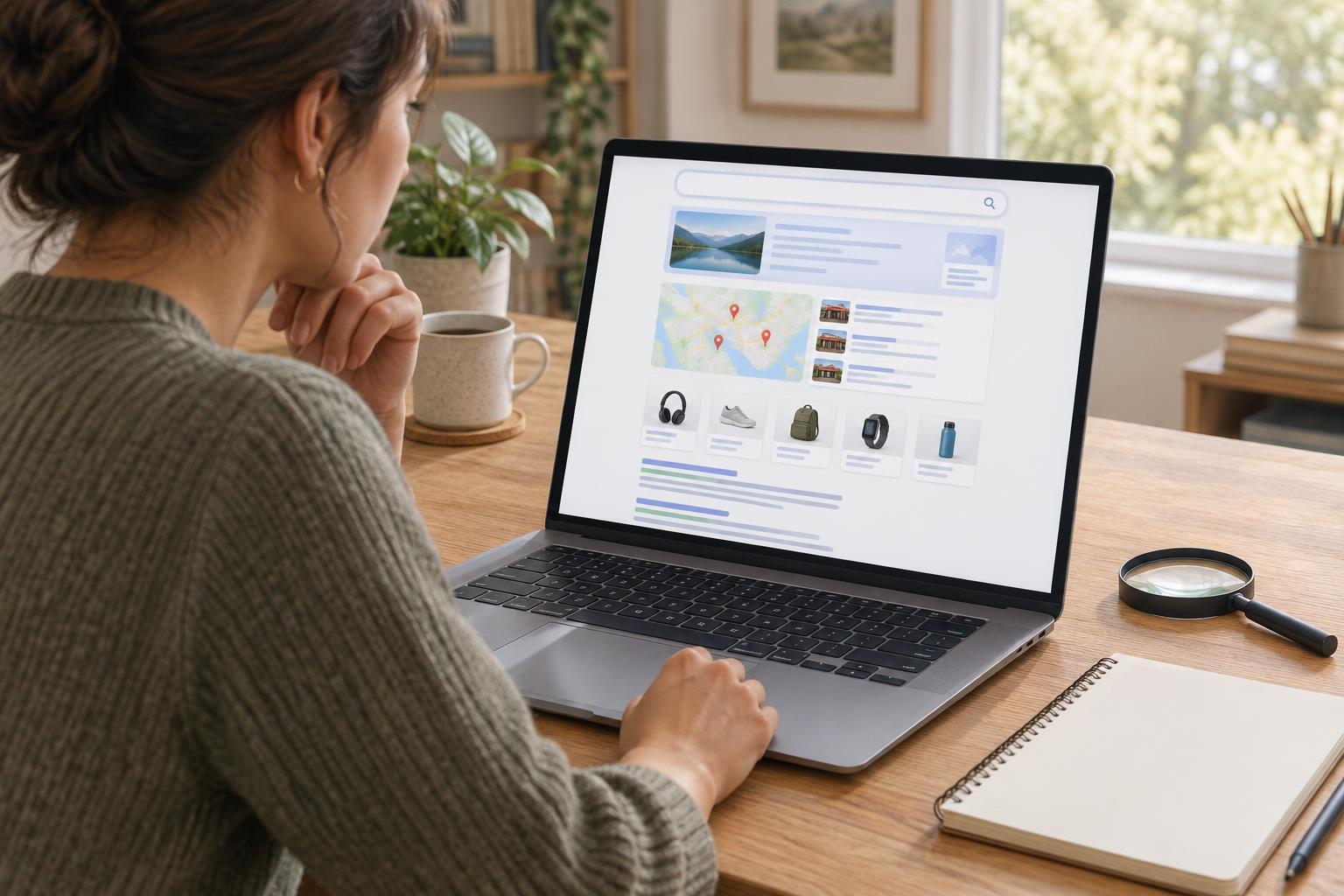
A keyword can have strong search volume yet offer fewer website clicks than you expect. The results page may answer the question directly, display a map, show products or place other features before standard website listings. Conversely, a modest-volume query can be valuable when searchers need a detailed explanation that the results page cannot provide on its own.
Click opportunity means the realistic chance that a searcher will visit a website after entering a query. It is not the same as search volume, ranking difficulty or the number of results. When researching keywords, look at what appears on the results page and what the searcher still needs to do. The layout provides clues, not a guaranteed click-through rate.
Match the feature to the searcher’s task
Different features serve different needs. A short factual answer near the top of the page may satisfy someone seeking a definition or a simple conversion. A local map can help someone choose a nearby business without visiting its website. Product listings can let shoppers compare prices and images before they consider an editorial result. Video results may draw attention when a task is easier to demonstrate than describe.
Do not treat every feature as a reason to reject a keyword. A brief answer may prompt a follow-up click when the task has exceptions, steps or choices. A local result may make a website visit more likely for someone who needs service details. Ask whether your page can help the searcher complete something the feature does not: understand a process, evaluate options, solve a problem or make a decision.
Inspect the results before committing to a topic
Start with a small set of queries closely related to the topic you could cover. For each one, note the likely intent and the prominent result types: standard listings, answer boxes, discussion pages, images, videos, product results or local results. Then scan the pages that appear to see what they offer. Are searchers looking for a quick fact, a comparison, a tutorial or a provider?
Check more than one phrasing of the query, because small wording changes can reveal different tasks. For example, “what is a site audit” may invite a concise explanation, while “how to conduct a site audit” suggests a need for instructions. If mobile users matter to your audience, inspect a mobile view as well; screen space can change how noticeable each result is. Results can also vary by location and over time, so treat a single inspection as a snapshot.
Compare clicks with the value of the visit
A useful keyword decision combines click opportunity with relevance. Estimate whether a website click is necessary or helpful for the task, then ask whether your site can serve that visitor well. A query with limited click opportunity might still merit a page if it answers an important question for your audience. A query with plenty of apparent clicks may be a poor fit if visitors want something you do not provide.
Keep these judgments simple enough to use consistently. A planning sheet might record the query, intent, prominent features, likely reason to click, fit with your site and priority. Use plain labels such as low, medium and high rather than inventing precise traffic forecasts. This makes assumptions visible and gives you a way to compare topics without mistaking an estimate for a measurement.
Use performance data to refine your judgment
After publishing, compare your expectations with the data available to you. Search performance reports can show impressions, clicks and the queries associated with a page, though they do not explain every individual searcher’s behavior. Look for patterns across related queries rather than treating one keyword’s click-through rate as a universal rule. A page can earn impressions for several variations that show different result features.
If a page appears for relevant queries but earns few clicks, revisit both the results page and your page’s presentation. The title and description should clearly indicate what the visitor will gain, without making promises the content cannot fulfill. If people do click, consider whether the page helps them finish their task. Keyword research works best as a continuing cycle: inspect the results, publish genuinely useful content, measure what happens and adjust your priorities.